Berkeley Hills Roofing Under the Hardwood Canopy
Berkeley Hills grew up around its country club, on the wooded rises near Berkeley Lake just off Peachtree Industrial Boulevard on Duluth's west side. The ranches and split-levels here date to the 1970s and 1980s, and most sit under mature hardwoods that have shaded their roofs for decades. That shade is the defining fact of roofing in Berkeley Hills. Best Duluth Roofer is a local roofing company serving Berkeley Hills and Gwinnett County, and we do our own work. We read these roofs every week: moss pressure, streaked north slopes, aging decking, and all. Free inspections, honest findings, written quotes.
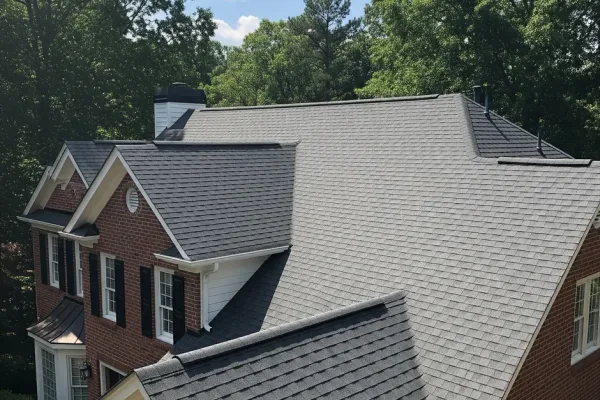
Help matched to the age of Berkeley Hills homes
A neighborhood built in the 1970s and 1980s needs a roofer who respects what is under the shingles. Best Duluth Roofer is a local roofing company serving Berkeley Hills and Gwinnett County, and we do our own work. We know this housing stock, we install GAF and CertainTeed systems, and every job starts with a free inspection and a written, itemized quote.
Ranches and split-levels from that era often have decking, ventilation, and flashing details that predate modern code. Some carry a second shingle layer. None of that is a crisis, but it changes how work should be scoped, which is why every Berkeley Hills job starts with our crew walking the roof and the attic before writing a number.
Algae and moss strategy, not just removal
North-facing slopes under hardwood shade streak and grow moss faster than open roofs. The crew pairs algae-resistant shingle lines with copper or zinc strips near the ridge, which wash the slope with every rain and keep growth from coming back.
Era-aware inspections
Split-level roofs hide problems at their step-downs and side-wall flashing. Inspections in Berkeley Hills cover the attic side too, checking decking from below for moisture staining and confirming soffit and ridge airflow.
North-facing slopes under hardwoods streak first
Drive Berkeley Hills after a rain and the pattern is easy to spot: dark streaking down the north side of roof after roof, while the sunny planes stay clean. Shade from mature hardwoods keeps those slopes damp long after storms pass, and the algae behind the streaks feeds on the limestone filler in standard shingles. Left alone, moss follows, holding moisture against the roof and prying at shingle edges. Aggressive pressure washing is the wrong response; it strips granules and shortens the roof's life. The right response is a gentle soft-wash where cleaning is warranted, algae-resistant shingles at replacement time, and metal detailing near the ridge that suppresses regrowth. It is a solvable problem, and Berkeley Hills has more of it than almost anywhere in Duluth.
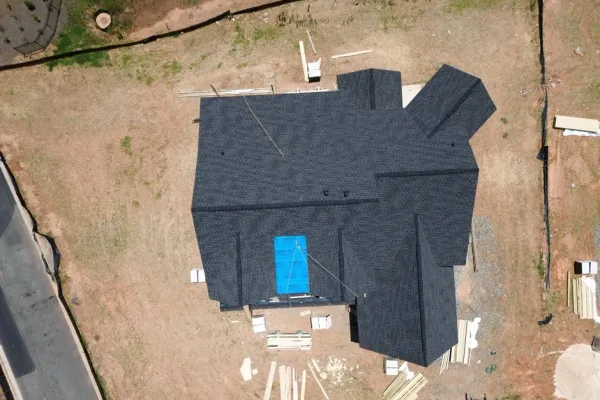
Ranches and split-levels hide their leaks well
The 1970s and 1980s floor plans that fill Berkeley Hills leak in places owners rarely think to check. Split-levels concentrate risk where an upper roof plane meets a lower one, at the step flashing along side walls, and at transitions detailed to the standards of their day. Ranches spread water damage wide and slow: a small puncture or a failed pipe boot can wet insulation for months before a ceiling stain finally appears, usually far from the actual entry point. Tracing that path is the skill. Our crew starts at the stain, works uphill across decking and underlayment, and finds where water actually enters before quoting anything. Fast, accurate roof leak repair costs a fraction of the drywall, flooring, and framing work a slow leak eventually forces.
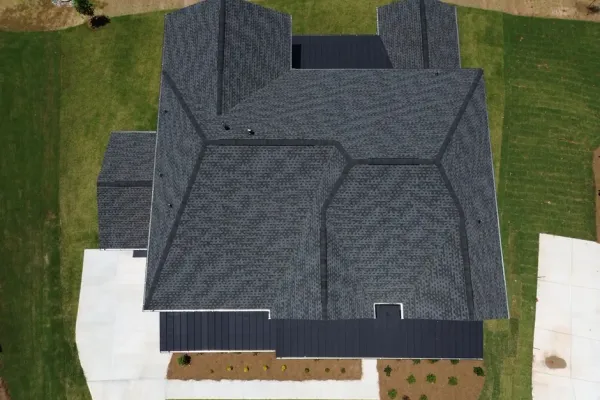
Leaf load makes gutters a roofing issue in Berkeley Hills
Hardwood canopy gives Berkeley Hills its character and its most persistent maintenance chore. Oak and hickory leaf drop buries gutters every fall, spring adds catkins and seed pods, and summer thunderstorms knock down enough small debris to matter year-round. When gutters pack full, water backs up under the drip edge, soaks fascia boards, and overflows against foundations. Twice-a-year gutter cleaning is the honest baseline here, more than most open-lot neighborhoods need. Where clogging is chronic, guards matched to fine debris earn their cost quickly. The crew also checks fascia and soffit on every Berkeley Hills visit, since boards this age are often the first wood to go soft.
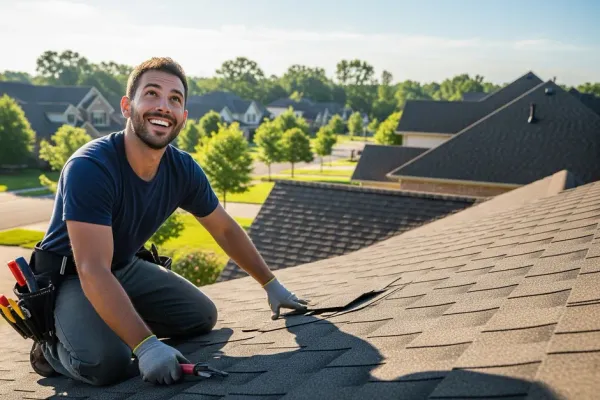
Ventilation upgrades pay off on 1970s attics
Many Berkeley Hills attics were framed when ventilation standards were a fraction of what modern shingle warranties assume. Gable vents alone move little air, and summer attic heat under Georgia sun will cook shingles from below, aging a roof years ahead of its warranty math. Shade helps the outside of these roofs but does nothing for trapped attic heat and winter moisture, which condenses on cold decking and feeds rot from the inside. The fix is straightforward during any roof project: open and screen the soffit intake, then add a continuous ridge vent. Balanced airflow lowers summer cooling bills, keeps winter decking dry, and adds real years to whatever shingle goes on next. On this housing stock it is the highest-return upgrade there is.
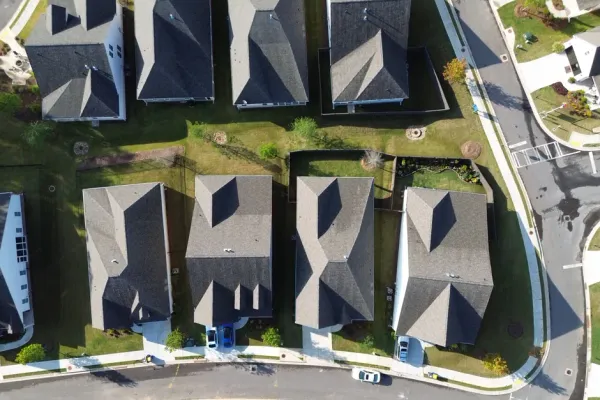
Berkeley Hills takes its name and its center from Berkeley Hills Country Club, the green heart of the neighborhood near Berkeley Lake on Duluth’s west side. Peachtree Industrial Boulevard runs the neighborhood’s edge and ties it to the rest of Gwinnett County, but the streets themselves feel a world apart from the corridor: winding, hilly, and deeply shaded by mature hardwoods. The homes are ranches and split-levels from the 1970s and 1980s, with roofs that live a different life than roofs in open subdivisions. Shade sets the terms in Berkeley Hills, and smart owners work with it.
Decades of tree growth changed what these roofs need
The canopy cuts both ways. Shaded shingles dodge some of the ultraviolet punishment that ages open roofs, and the tree break softens straight-line wind before it reaches ridge lines. In exchange, shaded slopes dry slowly, feed algae and moss, and collect a steady rain of twigs, leaves, and catkins that pack valleys and gutters. Meanwhile the attics below, framed to 1970s ventilation habits, trap heat and moisture the canopy never touches. Roofing in Berkeley Hills means managing water and airflow more than fighting sun. Open-lot neighborhoods across Duluth have the opposite problem, which is why a one-size roofing spec serves nobody.
A shade calendar keeps Berkeley Hills roofs ahead of the trees
Trees set the schedule here, so follow them. Late winter, while branches are bare, is inspection season: streaking, moss thickness, flashing condition, and any decking sag all read clearly with the canopy open. Spring drops pollen and catkins, so rinse gutter outlets and confirm downspouts run free before thunderstorm season. Summer is for storm checks after any cell that drops limbs, plus a glance at ceilings below roof step-downs. Fall is the big one: full gutter cleaning after leaf drop finishes, valleys cleared by hand, and fascia checked while everything is accessible. Homes that keep this rhythm go decades between surprises. Homes that skip it call us in January with a ceiling stain.
The work Berkeley Hills books most
Leak tracing and repair leads the list, followed by gutter service, algae-focused cleanings, and eventually full roof replacement with algae-resistant shingle lines suited to the canopy. Replacement decisions on this housing stock go better with numbers early, so run an instant roof estimate before you book anything. Two minutes online gives you a working range, and the free inspection turns it into a real quote.
West Duluth is home ground, and coverage runs county-wide
From Berkeley Hills, the crew covers Duluth’s west side daily and follows Peachtree Industrial in both directions, south past Peachtree Corners and on toward Norcross, with the rest of Gwinnett County in easy reach off I-85 and Pleasant Hill Road. Same crew everywhere, same process: free inspection, honest findings, written quote, and a clean site when the work wraps.
Why do so many roofs near the country club have dark streaks?
Those streaks are algae feeding on the limestone filler inside standard asphalt shingles, and the hardwood shade over Berkeley Hills gives it ideal growing conditions on north-facing slopes. The streaking is mostly cosmetic at first, but the same conditions eventually grow moss, which holds water against the roof and lifts shingle edges. A soft-wash cleaning handles the appearance, and algae-resistant shingles with copper or zinc at the ridge handle the cause at replacement time.
Is pressure washing safe for a shaded Berkeley Hills roof?
No. High-pressure washing strips the granule layer that protects asphalt shingles from UV, and on a roof already softened by decades of Georgia summers it can take years off the remaining life in one afternoon. Streaking and moss respond to low-pressure soft washing with the right cleaning solution. If a company quotes you a pressure wash for roof algae, keep looking. The cheap cleaning is real, and so is the roof it ruins.
Our split-level still has its original roof details. Repair or replace?
It depends on what an inspection actually finds, not the calendar alone. Some older roofs in Berkeley Hills have been maintained well and can run years longer with targeted repairs at flashing and pipe boots. Others carry layered shingles, tired decking, or chronic moisture at the step-down walls. We walk the roof and the attic, photograph everything, and price both paths in writing so you can weigh a repair plan against replacement with actual numbers.
Do wooded lots mean more storm damage in Berkeley Hills?
More of a specific kind. Berkeley Hills sees fewer wind-uplift failures than open neighborhoods because the canopy breaks the gusts, but it sees far more limb strikes, puncture damage, and debris-packed valleys after Gwinnett County's summer thunderstorms. If a limb has come down on the roof, stay off it and call. Emergency tarping stops the interior damage, then a full inspection separates what insurance covers from what maintenance handles.
What does roof work cost on a Berkeley Hills ranch?
Ranches price differently than two-story homes: more roof area per square foot of living space, but easier access and gentler pitches. Streak-resistant shingle upgrades add modestly to material cost and are worth it under this much canopy. The honest answer comes from measuring your actual roof. The online roof cost calculator produces a fast ballpark for your home, and a free on-site inspection turns that into a line-item written quote.
Who shows up when I call about a Berkeley Hills roof?
Best Duluth Roofer is a local roofing company serving Berkeley Hills and Gwinnett County, and we do our own work; we are not a middleman. Our home base is Duluth, and we install GAF and CertainTeed systems. The same crew handles your inspection, your quote, and the work itself.
Find out what your Berkeley Hills roof actually needs
Under this much canopy, guessing is expensive. Get a free inspection from a crew that works shaded Duluth roofs every week: a full walk of every slope, attic-side checks, photos of what turns up, and a written quote that separates must-do-now from can-wait.
Not sure what a new roof runs? Estimate your roof cost in Duluth, measured from satellite imagery, or run a storm & insurance damage check.