Roofing for Sugarloaf's Estate Homes in Duluth
The Sugarloaf Parkway corridor is where Duluth meets its biggest crowds, with the Gas South Arena district nearby pulling events from across Gwinnett County. Behind the gates, Sugarloaf Country Club wraps its TPC golf course with some of the largest custom homes in the county, and those homes carry serious roofs. Multiple hips, long valleys, and premium materials demand a crew that works at that scale every week. Ours does. Best Duluth Roofer is a local roofing company serving Sugarloaf and Gwinnett County, and we do our own work. Free inspections, written estimates, and manufacturer-spec GAF and CertainTeed installation on every Sugarloaf project.
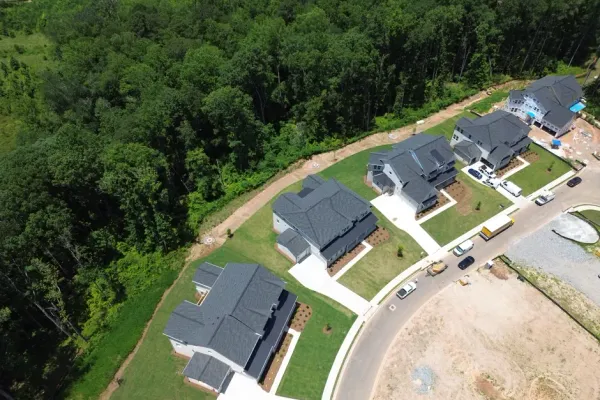
A crew sized for Sugarloaf's largest roofs
An oversized custom roof leaves no room for a learning curve. Best Duluth Roofer is a local roofing company serving Sugarloaf and Gwinnett County, and we do our own work. We install GAF and CertainTeed systems to manufacturer spec, and qualifying products carry manufacturer material warranties up to 50 years.
The estates built here through the 1990s and 2000s carry two to three times the surface of a typical Gwinnett roof, with valleys, dormers, and flashing details to match. We staff these projects with crews who spend their weeks on complex roof geometry, and we price every square in writing before work begins.
Gated-community logistics, managed
Sugarloaf projects involve gate access coordination and material staging on large lots. The crew schedules deliveries in tight windows, keeps staging contained, and leaves the property magnet-swept and clean at the end of every working day.
Materials that match the architecture
Designer shingle lines, standing seam metal accents, and upgraded underlayment systems suit the scale and rooflines of Sugarloaf's custom homes. We install GAF and CertainTeed systems to manufacturer spec, which is exactly what keeps the manufacturer material warranties valid for the next owner too.
Replacement cycles are arriving on Sugarloaf's gated streets
Most of Sugarloaf's estate homes went up between the early 1990s and the mid 2000s, which puts their original roofs at or past the age where asphalt systems retire. The signs show up quietly on homes this size: granule loss concentrated on sun-baked southern planes, pipe boots cracking a decade before the shingles fail, and flashing joints working loose where big rooflines meet masonry. A roof this large fails in stages, so owners often patch for years before accepting the math. A full walk of the roof maps every slope, ranks what is urgent against what can wait, and produces a written plan an owner can budget around, whether that means two more years of maintenance or a scheduled replacement next spring.
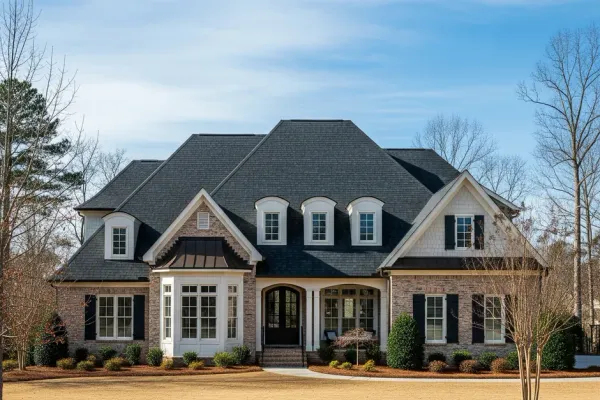
Golf course lots trade shade problems for wind and sun
Homes along the TPC fairways sit in open exposure most Duluth roofs never see. Without a tree canopy, southern and western planes take full Georgia sun for decades, which ages shingles faster and fades color unevenly. Open sightlines also mean open wind. Gusts that cross a fairway hit ridge lines and hip caps with nothing to slow them down, and wind uplift is the failure mode we check first after any storm that crosses the Sugarloaf Parkway corridor. Enhanced fastening at ridges and rakes, high-wind rated shingle lines, and correctly detailed drip edge all earn their cost on these lots. The upside: no moss pressure and no limb strikes, so a well-built golf course roof ages predictably.
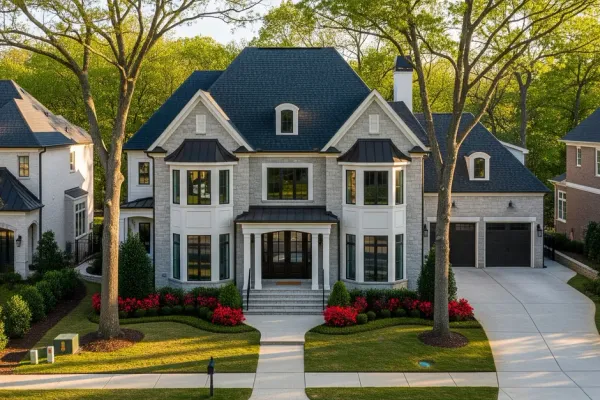
High-capacity gutters keep oversized roof planes drained
A big roof concentrates a surprising amount of water. Several thousand extra square feet of shingle surface drain into the same few corners during a Gwinnett County thunderstorm, and builder-standard gutters on a Sugarloaf estate often cannot keep up. The overflow shows up as trenched mulch beds, staining down brick, and in the worst cases water working back under the drip edge at the eaves. We size gutter systems to the actual roof area feeding them: larger K-style profiles, oversized downspouts, and placement planned so long runs actually carry water where it should go. If your gutters sheet over in every storm, the drainage is undersized. Gutter installation scoped correctly ends that cycle for good.

Insurance claims on estate roofs deserve careful documentation
When hail crosses I-85 and lands on Sugarloaf, the stakes scale with the roof. A claim on an oversized custom home can involve premium materials, complex flashing details, and numbers that make adjusters look twice, so the documentation has to be airtight. We photograph every slope, mark hail strikes and wind damage the way carriers expect to see them, and meet your adjuster on the roof rather than debating from the driveway. That process regularly surfaces damage a ground-level look misses. If the storm did not do claimable damage, you hear that plainly too. Emergency roof repair is available around the clock when a storm leaves an active leak over finished space.
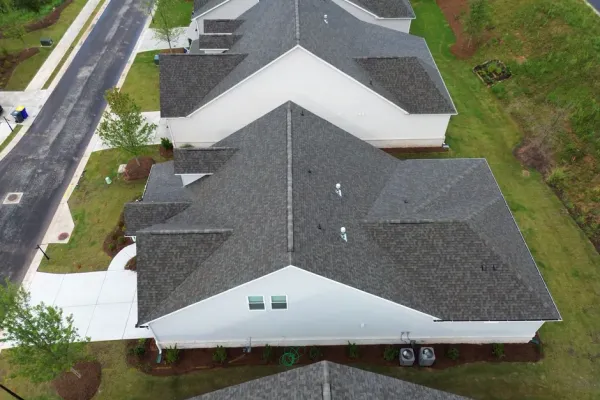
Sugarloaf occupies the stretch of Duluth where the city hosts its biggest days. The Sugarloaf Parkway corridor carries event traffic toward the Gas South Arena district at the neighborhood’s doorstep, and inside the gates, Sugarloaf Country Club spreads estate homes around its TPC golf course. The houses date mainly to the 1990s and 2000s, with roofs to match: oversized planes, long valleys, dormer details, and premium materials from the original build. Roofs like these deserve their own playbook, and that is the treatment Sugarloaf gets.
Scale changes how a roof is priced, staged, and built
An estate roof is not a suburban roof multiplied. It is a different project class. Surface area drives material cost, but the details drive everything else: every extra valley adds lineal feet of waterproofing, every dormer adds step flashing, and every transition between shingle and metal demands its own detail work. Tear-off alone runs longer, staging has to respect landscaping worth protecting, and the material conversation starts at grades a production subdivision never considers. This is why our first answer to a Sugarloaf pricing question is a thorough roof inspection rather than a number. Measured, photographed, and priced line by line, the roof tells you what it costs.
A Sugarloaf maintenance calendar for estate-scale roofs
Estate roofs reward owners who treat maintenance as a calendar item instead of a reaction. Late winter is for detail work: flashing joints, sealant at penetrations, and ridge caps that January wind may have worked loose. Spring opens hail season, so walk the grounds after any hard cell and look for granule wash at downspout exits. Summer is the flow test: watch how the gutters handle one big thunderstorm. Fall means clearing the long valleys and booking any repair before holiday hosting season. Add an attic-side look at ventilation and decking every few years, and a Sugarloaf roof will spend decades boring its owner, which is the goal.
Most Sugarloaf conversations start with a number
Nearly every Sugarloaf call opens with the same question, so start there: price out a replacement before you call and the rest of the conversation gets easier. From that baseline, the common bookings are full replacement in premium materials, targeted repair where a detail failed early, drainage upgrades sized to the actual roof, and storm documentation when hail has crossed the county. Each ends with a written scope and a number that holds.
Coverage runs from the gates to the rest of Gwinnett
From Sugarloaf, the crew works in every direction Duluth runs. The blocks around the Town Green are a short drive west, where the Downtown Duluth district keeps the same team busy on cottages and townhomes. Follow Sugarloaf Parkway the other way and coverage continues toward Lawrenceville and the county seat. One crew, one standard, anywhere in Gwinnett County a roof needs honest work.
When were most Sugarloaf roofs installed, and does that matter?
The neighborhood built out through the 1990s and 2000s, so a large share of Sugarloaf homes are living on original or first-replacement roofs right now, and asphalt systems from that era are reaching the end of their designed life. Age alone does not condemn a roof. It does mean an owner should know the roof's actual condition rather than assume, because planned replacement always prices better than emergency replacement.
Do you install premium and designer roofing materials?
Yes. Sugarloaf homes were designed around premium finishes, and the roof should match. We install GAF and CertainTeed designer shingle lines, high-wind rated architectural products, and standing seam metal accents over porches and bays where the design calls for them. Installed to manufacturer spec, qualifying products carry the manufacturers' material warranties. Material selection happens with samples at your home, not from a price sheet over the phone.
How does a roofing crew operate inside a gated community?
With planning. Access gets coordinated in advance, deliveries arrive in scheduled windows, and staging stays contained to your property instead of spreading into the street. Crews keep the site clean daily and run magnetic sweeps for fasteners across lawns and drives. Neighbors notice roofing projects in a community like Sugarloaf, and the quiet, contained version of a job site is the one that reflects well on you.
What does a roof replacement cost on a Sugarloaf estate home?
More than a typical Duluth quote, for honest reasons: two to three times the roof area, more valleys and flashing detail, and premium materials. The crew measures the actual roof, prices materials at the grade you choose, and delivers a line-item written estimate. For a fast starting point before anyone visits, the online roof cost calculator gives you a working ballpark for your square footage in about two minutes.
Can you inspect a roof before we buy or sell in Sugarloaf?
Yes, and on homes this size it is worth doing early in the transaction. An inspection before listing, or before closing, documents the roof's remaining life with photos and a written report, which beats a surprise on the inspection contingency. We walk every slope, check flashing and ventilation, read decking condition from the attic side, and deliver a report you can hand to an agent, a buyer, or an insurer.
How fast can someone reach Sugarloaf after a storm?
Quickly. Our home base is Duluth, and Sugarloaf fronts the Sugarloaf Parkway corridor with quick access from I-85, so storm calls from the neighborhood get same-day response and often same-hour tarping when a leak is active. Once the roof is stabilized, we document damage while it is fresh and walk you through repair, claim, or monitoring. The line at (470) 777-7344 answers around the clock in storm season.
Put a real number on your Sugarloaf roof
Whether your roof is original to the home or halfway through its second life, the next step is the same: a free walk of every slope, photos of what the crew finds, and a written estimate. Sugarloaf standards, held from first inspection to the final magnetic sweep.
Not sure what a new roof runs? Estimate your roof cost in Duluth, measured from satellite imagery, or run a storm & insurance damage check.